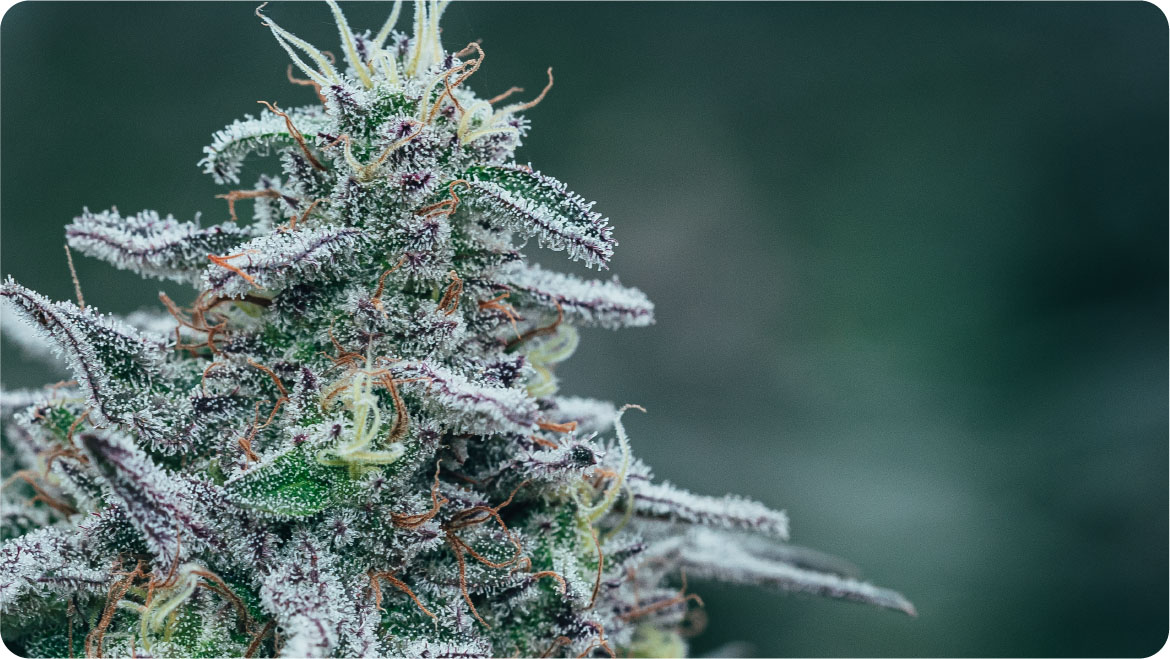


Indica is sleepy, sativa is awake, hybrid is somewhere in between. That's the version everyone repeats. It's also wrong. Or rather: it's a useful shorthand that hides what's actually driving the effect.
Here's the plain-English version of how cannabis strains actually work — and how to read a label like a pro.
The botanical truth
Cannabis is one species (Cannabis sativa L.). The "indica" and "sativa" labels were originally botanical descriptors of the plant's shape — short and bushy versus tall and lanky — not predictions of the high. After 100+ years of crossbreeding, almost every commercial strain is a hybrid, and the leaf shape doesn't reliably predict effect anymore.
What actually drives the high: cannabinoids (THC, CBD, CBG, CBN) plus terpenes (the aroma compounds — myrcene, limonene, pinene, linalool, others). The combination is what gives a strain its character. This is sometimes called the "entourage effect."
Cannabinoids: the muscle
Cannabinoids are the active compounds. The big ones:
- THC — the psychoactive one. Higher THC, stronger high.
- CBD — non-intoxicating, often credited with calming effects. Tempers the THC.
- CBG — "the mother cannabinoid." Mild, focus-leaning, increasingly featured in modern strains.
- CBN — what THC degrades into over time. Sedative — the "Grandaddy is putting me to sleep" effect is partly CBN.
Terpenes: the personality
If cannabinoids are the muscle, terpenes are the personality. They're the aromatic compounds — same family as the smell of pine, citrus peel, lavender, and black pepper. Different strains have wildly different terpene profiles, and that profile is what makes one OG feel different from another.
- Myrcene — earthy, mango. Often associated with "couch-lock" sedative strains. Heavy in Granddaddy Purp, Blueberry Kush.
- Limonene — citrus. Uplifting, mood-elevating notes. Heavy in Strawberry Cough, Super Lemon Haze.
- Pinene — pine, fresh forest. Often associated with focus, alertness. Heavy in Jack Herer, Blue Dream.
- Linalool — lavender, floral. Calming. Heavy in Lavender, LA Confidential.
- Caryophyllene — black pepper, spice. Often described as relaxing. Heavy in GSC, OG Kush.
- Humulene — hops, herbal. Earthy, grounding. Heavy in White Widow, Sour Diesel.
Most strains have 4–6 dominant terpenes. The ratio of these terpenes — combined with the cannabinoid profile — is what gives the strain its real character.
So what about indica vs sativa?
Useful shorthand. Mostly accurate. Just don't take it as gospel.
- Indica-dominant strains tend to be myrcene-heavy, often with caryophyllene and humulene. Earthy, sweet, sedative leaning. Good for evening, sleep, body relaxation.
- Sativa-dominant strains tend to be limonene-heavy and pinene-heavy. Citrus, pine, peppery. Good for daytime, social, creative work.
- Hybrid means somewhere between. Most modern strains are hybrids.
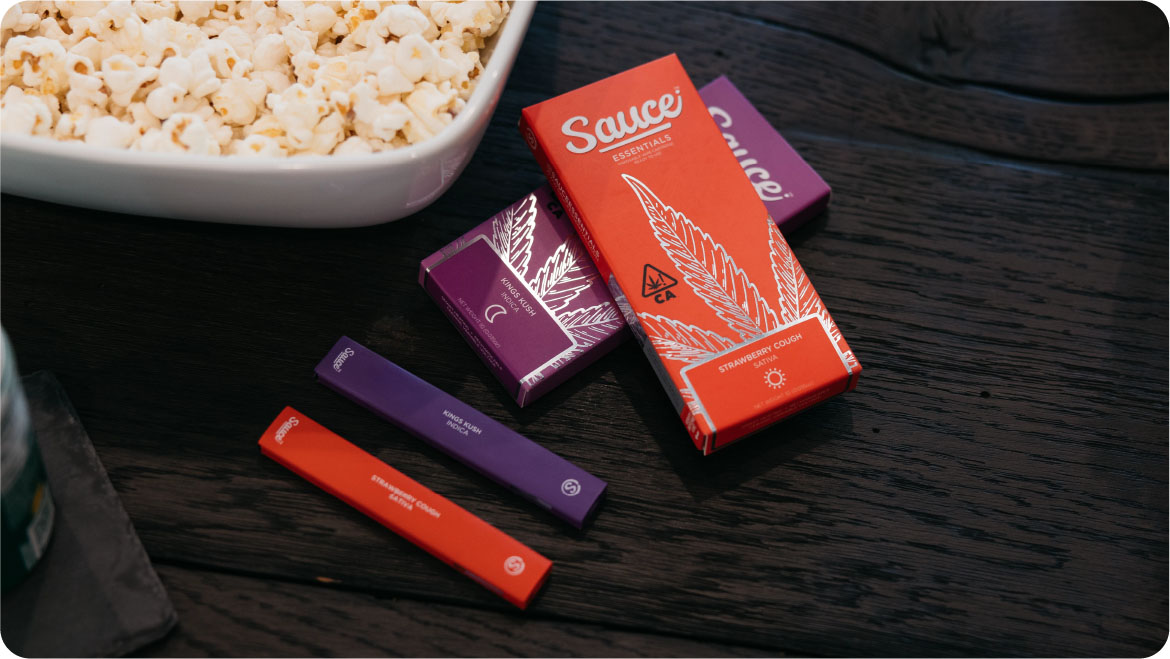
How to read a Sauce label
Every Sauce product lists three things:
- Strain name + lineage (e.g., "Blueberry Kush — DJ Short Blueberry × OG Kush")
- Cannabinoid profile with exact percentages from the COA
- Top three terpenes by concentration
So if you find that limonene-heavy strains hit you right, you can go to a dispensary, look at any new strain's terpene profile, and know within seconds whether you'll like it. That's how the pros pick.
A starter map
If you're new to picking strains, this is a rough map of where to start:
- For sleep: myrcene-heavy indicas. Granddaddy Purp, Blueberry Kush, Northern Lights.
- For social, creative, daytime: limonene + pinene sativas. Strawberry Cough, Super Lemon Haze, Jack Herer.
- For pain or anxiety without heavy sedation: CBD-dominant or 1:1 hybrids. ACDC, Harlequin, Cannatonic.
- For focus: pinene-forward sativas with CBG present. Jack Herer, Sour Diesel, our Sauce Bars in OG cuts.
- For relaxation without sleep: caryophyllene-forward hybrids. GSC, OG Kush, Apple Fritter.
Last word
Indica/sativa is fine as shorthand. Terpenes are how you actually pick. And the COA is how you trust the label. The whole system works when those three are aligned.